Strengthening Participatory Guarantee Systems for Local Organic Agriculture
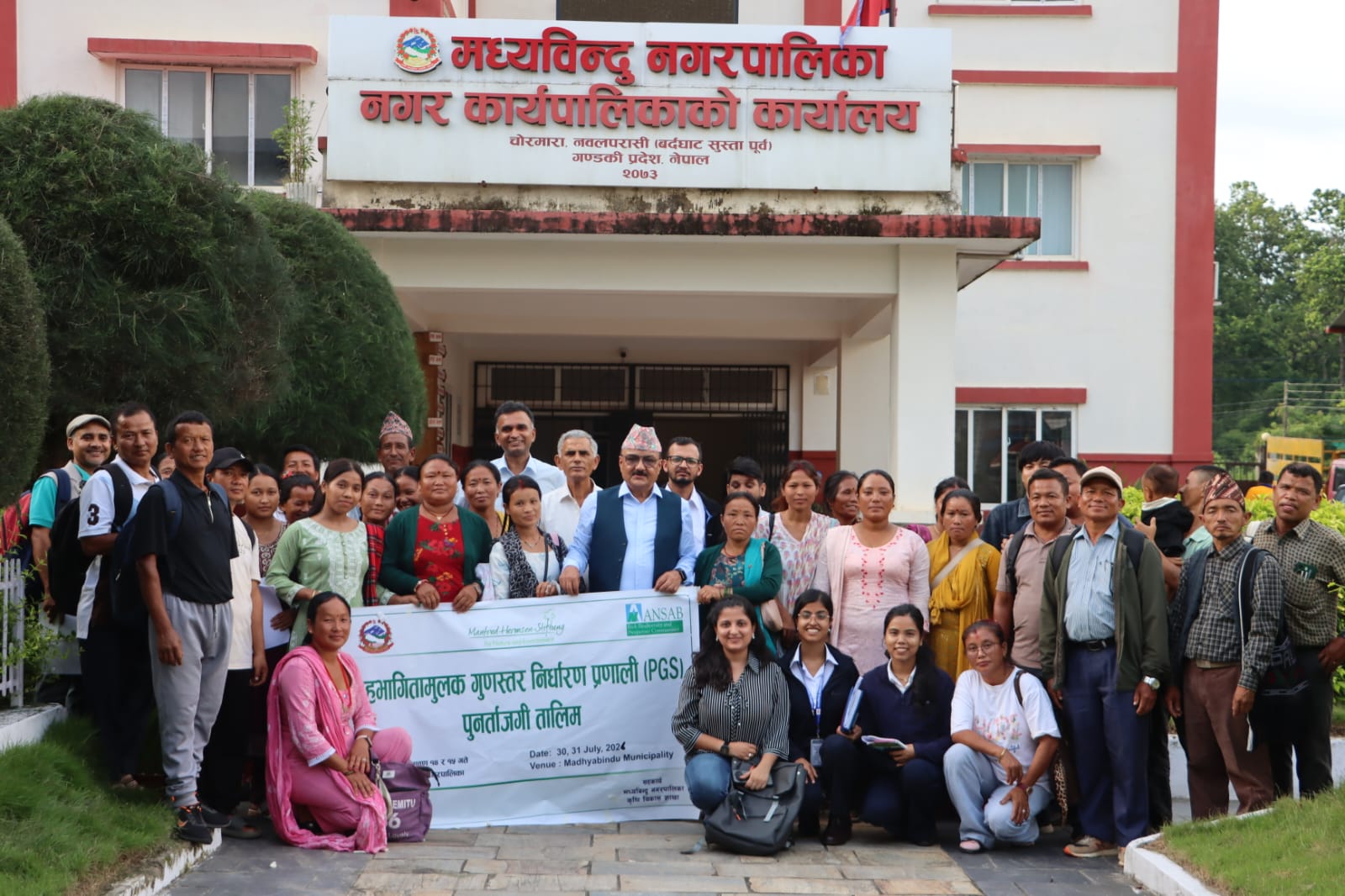
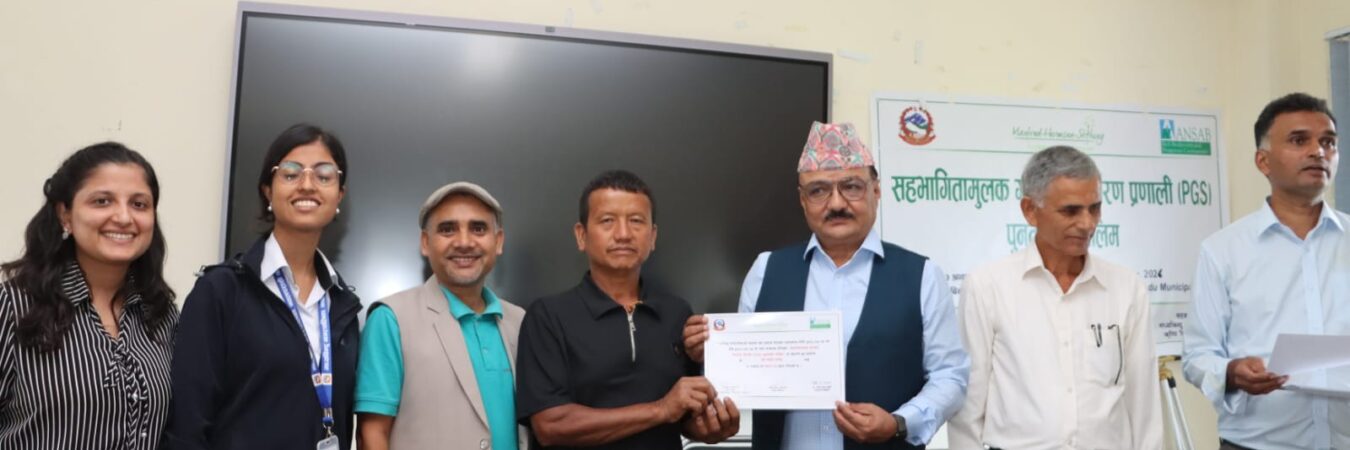
A two-day training on the Participatory Guarantee System (PGS) for organic farming was organized by ANSAB in Madhyabindu Municipality, Ward No. 14, for 31 producers. The training aimed to strengthen farmers’ understanding and practical application of organic agriculture and PGS principles. Participants learned about the concept of organic agriculture, national organic standards, an introduction to PGS, coordination with PGS stakeholders, PGS operational processes, updating farm data in farmers’ diaries, and the roles of the PGS management committee, inspectors, certification committee, producers, and the municipality. Interactive approaches—including group work, discussions, video demonstrations, and practical exercises—were used throughout the training.
Particular emphasis was given to the organic standards adopted by Madhyabindu Municipality and their application at the farm level. Participants also discussed the impacts of chemical farming and the practical measures required to maintain organic standards. The sessions highlighted that effective PGS implementation requires not only farmers’ commitment to organic production but also regular documentation, peer verification, coordination, and continuous learning.
Local Government Commitment to Organic Agriculture
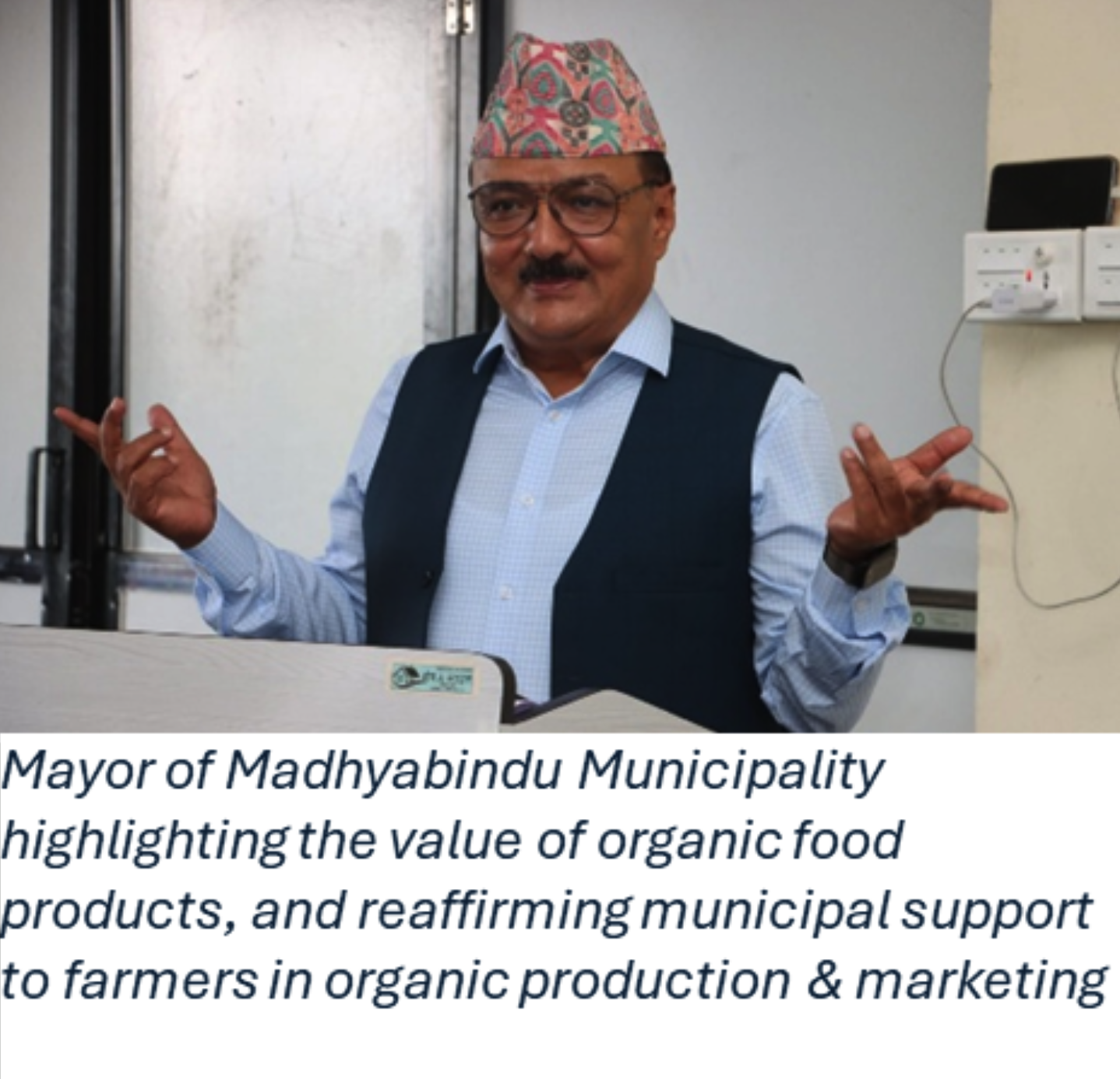
During the opening session, Deputy Mayor Ms. Purna Kala Chaudhary highlighted the importance of organic farming and the municipality’s efforts to promote organic agriculture and PGS through various support mechanisms, including the provision of tools and equipment for preparing organic inputs and the supply of organic compost at subsidized prices. Officials from the Agriculture Section explained the rationale for selecting Ward No. 14 for PGS implementation, citing factors such as agroecological suitability and opportunities for cash crops like ginger. Mayor Mr. Bhimlal Adhikari expressed the municipality’s commitment to supporting organic farmers and strengthening PGS in Madhyabindu Municipality. He encouraged farmers to focus on both the quantity and quality of organic products and emphasized the importance of creating better market opportunities for local producers.
“The municipality is ready to provide every possible support for the promotion of organic farming and PGS. The municipality will facilitate market linkages and support fair-price marketing arrangements with a dedicated outlet to obtain better market value.”
— Mr. Bhimlal Adhikari, Mayor, Madhyabindu Municipality
Reflection and Way Forward
The training reinforced an important lesson: PGS is more than a certification or verification mechanism; it is a participatory process for building trust, accountability, learning, and collective ownership among farmers and local institutions. Accurate records, regular peer interaction, transparent verification, and effective coordination among PGS structures are essential for building a credible local assurance system. The experience also highlighted the importance of linking PGS with agroecological production and local markets. With continued technical support, strong farmer participation, and active engagement from the municipality, PGS can contribute to improving production practices, strengthening consumer confidence, and creating better market opportunities for local organic producers.
The training provided a valuable platform for farmers, local government representatives, and technical facilitators to exchange experiences and identify practical actions for strengthening PGS implementation. Sustained collaboration among farmers, local governments, market actors, and supporting organizations will be critical to translating this learning into practice and building a stronger local organic food system.
The training was organized under the project Nature Conservation and Agroforestry Production in Rural Communities: A follow-up initiative towards sustaining biodiversity and community benefits, implemented by ANSAB Nepal with the funding support of the Manfred-Hermsen-Stiftung for Nature and Environment (MHS), Bremen, Germany.