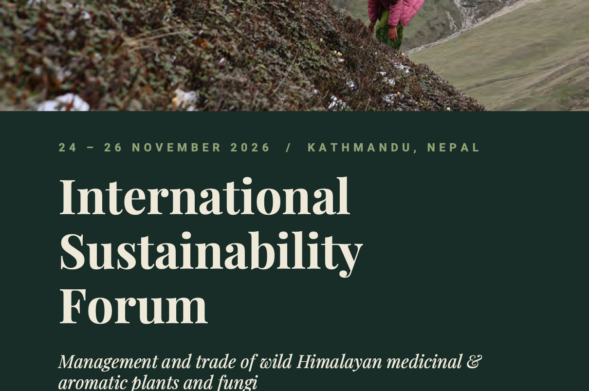
The Forum booklet
The Forum booklet
Why the Forum matters, the day-by-day programme and the four shared commitments.
Download the booklet

24–26 November 2026 · Everest Hotel, Kathmandu
Management and trade of wild Himalayan medicinal and aromatic plants and fungi
About 3,000 plant species used in medicine are traded across borders worldwide, and many of the most valuable grow wild high in the Himalayas. Overharvesting, climate change and illegal trade are putting both the species and their ecosystems at risk.
Government officials, CITES authorities, businesses, researchers and harvesting communities from across the region meet in Kathmandu to agree how this trade can remain legal, sustainable and fair.
Plants such as jatamansi and kutki, and fungi such as yarsagumba and guchi chyau (morels), are harvested by hand on steep slopes and supply medicine, food and cosmetics industries around the world. Once a dried root or fungus crosses a border, it is very hard to tell where or how it was harvested.
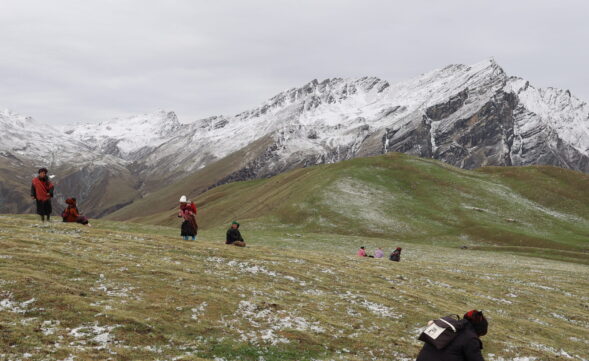
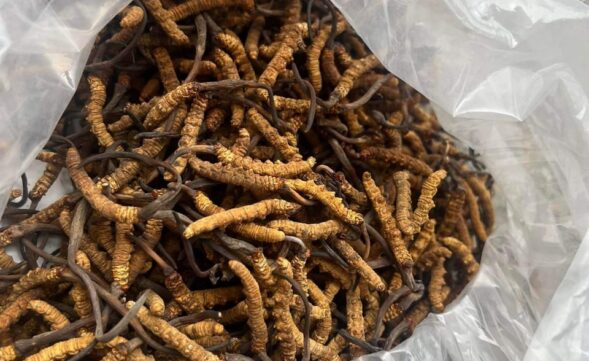
Nepal is a major source of wild-harvested Himalayan plants and fungi, with tens of thousands of tonnes traded each year. Demand from key markets, notably India and increasingly China, shapes the pressure on harvesting areas.
Because the trade crosses borders, so must the solutions. Building on the 2025 International Himalayan MAPs Workshop in Chongqing, China, the Forum brings together the countries along the trade chain to cooperate on sustainable harvesting, fair trade, financing, policy and CITES implementation.
Together, we are working towards a Himalayan trade where people and nature thrive within nature’s limits.
The Forum aims to strengthen regional cooperation on the conservation, sustainable harvest, processing and trade of wild Himalayan medicinal and aromatic plants and fungi. Over three days, participants work towards four shared commitments.
Promote sustainable harvesting, responsible sourcing and fair value chains that strengthen local livelihoods and partnerships with industry.
Strengthen CITES implementation, traceability and ethical trade frameworks so that international trade is legal, transparent and sustainable.
Identify priority species, evidence gaps and research needs, and explore sustainable finance for long-term conservation and landscape management.
Align policies among trading partners, including Nepal, China, Bhutan and India, and develop a shared roadmap for joint action from 2027 to 2032.
| The Department of Forests (DoF) of the Ministry of Agriculture, Forests and Environment (MoAFE) hosts the Forum and will present a draft proposal for a regional cooperation framework on Himalayan medicinal and aromatic plants. |
| TRAFFIC works to ensure that trade in wild species is legal and sustainable, for the benefit of the planet and people. |
| The Asia Network for Sustainable Agriculture and Bioresources, founded in 1992, has worked in more than 30 districts of Nepal and leads much of the evidence the Forum will discuss. |
Governments, researchers and organisations set out recommendations and strategic directions for sustainable trade in Himalayan medicinal plants.
Range states and partners turn those directions into a regional cooperation framework and a refined action plan.
Joint action on conservation, livelihoods, sustainable use and trade of wild Himalayan plants and fungi.
Seat-taking
15 mins
| Chief Guest: Hon. Gita Chaudhary, Minister, MoAFE (TBC); Special Guest: Dr. Rajendra Prasad Mishra, Secretary, MoAFE; Other Guests: Government Representatives (China, Bhutan, India, UK), TRAFFIC. National Anthem; Inauguration |
Chair
Himalayan MAPs and Fungi: Strengthening regional cooperation for conservation, livelihoods and sustainable trade
35–40 mins
| Welcome to guests and participants; Objectives of the Forum |
Chair
Presentation of the draft proposal on Himalayan MAPs cooperation framework
15 mins
Chair
45 mins
| Mme Ivonne Higuero, CITES Secretary General (recorded); Mr. Luke Beaumont, Deputy Head of Mission, UK Embassy; Ms Anastasiya Timoshyna, TRAFFIC; Mr. Sangay Dorjee, Bhutan; Government representatives (India, China); (Optional) World Bank, ADB, GCF, GEF; Dr. Rajendra Prasad Mishra; Chief Guest: Hon. Gita Chaudhary (TBC) |
5 mins
Chair
Plenary panel discussion: Operationalising regional cooperation for sustainable management and trade of Himalayan MAPs and fungi. Perspectives from Himalayan countries stakeholders; Policy and trade opportunities, challenges and priorities
Two 15 min presentations; followed by facilitated discussion and Q&A. REVIEW Chongqing recommendations and draft KTM Declaration.
Presentations: Dr Sanjeev Kumar Rai, DG, Department of Plant Resources — Recommendations for Regional Cooperation, from Chongqing Workshop to Kathmandu and beyond (15 min); Dil Raj Khanal, FECOFUN/ANSAB — Regional Trade Policy: Provisions, gaps and opportunities for cross-border collaboration (15 min). Followed by facilitated panel discussion.
Chair
Panelists
Set of presentations; 7–10 min opening presentations; 50–60 min followed by Q&A/discussion
| Panelists: Dr Bijendra Basnyat, UNDP — Towards 2030 Global Biodiversity Framework; Vidur Ghimire, International Trade Centre — Sustainable trade in Himalayan resources; Industry representative (TBC) — Global trade, local impacts; Mr. CHEN Qing, CATCM — Himalayan wild plant and fungi treasures; Ms Sudha Khadka, RECOFTC Nepal — Lessons from SEGA programme; Ms Deepa Oli, DoF — Gender and Himalayan resources conservation (TBC) |
Chair
Start with CITES & Livelihoods film (5 min)
Set of short presentations or opening remarks followed by discussion
| Mr Thakur Bhandari, FECOFUN — Community Forestry in Nepal; Ms Dolma Tamang, Saipal RM, Bajhang — Living with plants and fungi in high-altitude Himalayas; Mr Gokarna Chaulagain, FECOFUN Jumla — Living with plants and fungi; Mr Bikash Adhikari, Tribhuvan University — Livelihoods of NTFPs collectors; Mr Kamal Kumar Rai, Nepal Indigenous Forum for Biodiversity — Traditional Knowledge; Ms. Saraswoti Rai Gurung, NEHHPA — Partnership for Equitable Trade |
Chair
5 x 12 min presentations followed by discussion
| Prof. Carsten Smith-Hall, University of Copenhagen — Himalayan resources trade sustainability: state of play and priority actions; Dr. Dipesh Pyakurel, ANSAB & Mr. Raj Kumar Giri, REDD IC — Insights from Nepal’s national inventory of Himalayan MAPs; Ms CHEN Yingying, Guangxi Zhuang Autonomous Region Forestry Research Institute — Title TBC; Dr. Harsh Chauhan, Kumaun University & IUCN SSC MPSG — Global IUCN Red List assessments; Mr. Wangchuk, JDNP Bhutan — Data and evidence for sustainable resource management of NTFPs in Bhutan |
Chair
What is the state of implementation of CITES for high-altitude Himalayan species, what are the challenges and opportunities. Panel discussion.
| Dr. Merwyn Fernandes, WWF India — CITES implementation for sustainability of Himalayan MAPs; Dr. Umeshkumar L. Tiwari, BSI-Sikkim — (request); Mr. Sangay Wangchuk, UWIFoRT Bhutan; Mr Nabaraj Pudasaini, DG, DoF Nepal |
Chair
4 presentations x 15 min each; 30 min summary/discussion
| Mr James Stevens, TRAFFIC — Trade of MAPs from Nepal’s Himalayas, a synthesis (confirmed); Mr Zhang Ke, TRAFFIC China — China’s market demand for Himalayan MAPs (confirmed); Mr Binh Bui, Trace Verified — Designing traceability system for transparent trade; Rabindra Nath Shukla, Satya Herbals — Building value for Himalayan wild plants and fungi supply chains; Mr Jamal Rowe-Habbari, FairWild Foundation — Voluntary certification increasing market value (confirmed) |
Chair
Interactive workshop: 16.00–17.00; report back to plenary 17.00–17.20
| Participants rotate between tables and discuss a set of questions |
Chair
Interactive workshop: 16.00–17.00; report back to plenary 17.00–17.20
| Participants rotate between tables and discuss a set of questions |
Chair
Summary of the Day, housekeeping, Day 3 outline
Chair
Several short presentations (10 mins each) followed by Q&A discussion
| Mr Khilendra Gurung, HBTL — Sustainable supply chain and industry partnerships (ANSAB requested); Mrs. Saraswoti Rai, NEPPHA — Building sustainable business opportunities; Govinda Ghimire — Nepal Herbs logo; Mountain Rose Herbs — building sustainable partnerships (recorded); Ms Suganthi Thangalevu, Last Forest Enterprises — Making market-based approaches work; Gajendra Agrawal, FEDMAPs India — Traders’ perspective on sustainability; CATCM/Chinese company |
Chair
| Display for the entire day |
Facilitated panel discussion
| Mr. Amrit Lamsal, Joint Secretary, International Economic Relation Division, Ministry of Finance; S. Amer Ahmed, Operations Manager, World Bank Group; Dr Bijendra Basnyat, UNDP — BIOFIN focal point; Dr. Sunita Chaudhary, ICIMOD; EU Delegation Nepal / UK Embassy / German Embassy; ADB (TBC); Private sector — NEPPHA, DoTERRA; A philanthropist; Carbon and biodiversity credits expert; GCF/GEF; ITC |
Chair
Potential areas: conservation and sustainable resource management (priority species); value addition and sustainable trade; policy alignment and enforcement (harmonizing national policies); How to operationalize regional cooperation
| Break out: 3 groups for areas of cooperation + 1 group for operational model development. 10 mins setting, 5 mins breakout, 60 mins group work, 45 mins presentation |
Chair
Group Facilitators
Opportunities for Q&A with Nepali exporters and buyers, B2B meetings
| Display for the entire day; organized B2B during this period |
Presentation of the consolidated regional action plan; Closing remarks from the organizers
| Presenter: Prof. Carsten Smith Hall, University of Copenhagen |
Chair
Optional field visit for interested participants
Summary of the Day, invitation to Networking reception, Day 2 outline
Chair
| ANSAB & TRAFFIC. Consider ice-breaking/networking elements. |
| Display for the entire day |
Can’t find your answer? Contact the organisers.
| A three-day meeting in Kathmandu, Nepal, from 24 to 26 November 2026, with an optional field visit on 27 November. It brings together governments, CITES authorities, researchers, businesses, donors and communities to strengthen regional cooperation on sustainable harvesting and trade, financing, policy and CITES implementation. |
| Attendance is by invitation. About 100 representatives of policy and regulatory bodies, civil society, the private sector, multilateral organisations and academia from Nepal, India, China, Bhutan and international partner countries take part on site at the Everest Hotel, Kathmandu. |
| Plants used for their healing properties or scent in medicines, food, cosmetics and other products. About 3,000 medicinal plant species are traded internationally (TRAFFIC, 2019). In the Himalayas, almost all of them, and the valuable fungi traded alongside them, are harvested from the wild. |
| CITES, the Convention on International Trade in Endangered Species of Wild Fauna and Flora, regulates international trade in listed species so it does not threaten their survival. Himalayan plants such as jatamansi are listed in CITES Appendix II, so exports must be shown to be legal and sustainable. |
| A regional action plan and progress towards a shared roadmap for 2027 to 2032 on conservation, livelihoods, sustainable use and trade of wild Himalayan plants and fungi. Outcomes will be published on this page after the Forum. |
| It is organised by the Department of Forests of Nepal's Ministry of Agriculture, Forests and Environment, TRAFFIC and ANSAB. The UK Government funds it through the Darwin Initiative project "Scaling conservation of Himalayan plants and fungi through sustainable trade" (DAREX012). |
| English and Nepali. |
The International Sustainability Forum is part of the SHIFT initiative, supported by the UK Government's Darwin Initiative.